Inversion Drain Reline: The High-Performance Solution for Long Pipeline Repairs

Trusted on the Northside for over 20 years
Priority Book a Plumber

How Inversion Pipe Relining Works
Inversion pipe relining involves inserting a resin-saturated liner into a damaged pipe using air or water pressure. Once inside, the liner is expanded and cured using steam, hot water or UV light. This forms a new, jointless pipe within the old one — strong, smooth and resistant to corrosion, root intrusion and leaks.
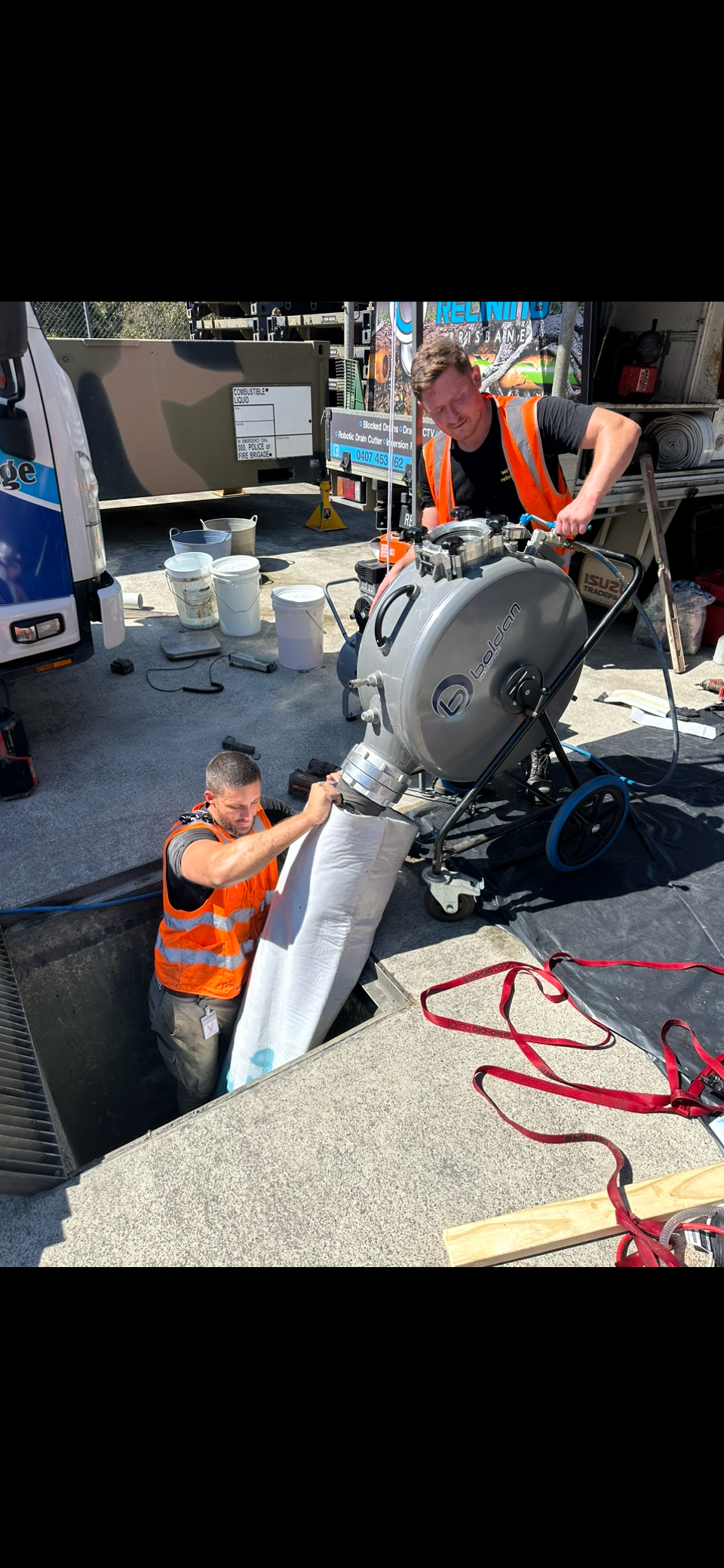
We use a specialist sluice drum to load and control the liner as it feeds through the pipe. This method allows us to complete relines in deep or long sections, even with multiple bends and junctions. Our robotic cutters then reopen lateral connections with millimetre accuracy.
This process is particularly suited for major infrastructure or estates where access is limited and excavation would be prohibitively expensive or destructive. From unit complexes and driveways to zero-boundary homes, CIPP relining delivers unmatched efficiency and durability.
Testimonials

Noah
Karen
Graeme
Ms P
Mary
Paolo
Tom
Leslie
Matthew
James
Trusted Experts in CIPP Relining for Heritage and High-Access Projects
Pipe Relining Brisbane is trusted across Brisbane for high-profile and heritage projects requiring non-invasive, high-performance solutions. We’ve successfully carried out major inversion relining jobs at institutions such as the University of Queensland and Customs House, preserving heritage value while upgrading infrastructure.
Our team is equipped with cutting-edge tools and trained in best practices for Australian standards. We can navigate internal walls, underground car parks and communal driveways with no structural impact. We understand the stakes of working in sensitive environments, and our CIPP relining methods are tailored to protect both the property and the plumbing.

When to Choose Inversion Relining Over Patch Repair
While patch repairs are ideal for localised defects, inversion pipe relining is the better choice when multiple sections are damaged, access points are limited, or when the pipeline exceeds 10–15 metres. It’s also essential when the pipe has several lateral connections that require reinstatement.
Our process is designed to cover long runs without having to dig, cut or remove any existing surfaces. It is especially effective under driveways, internal flooring, heritage structures and tightly packed residential zones where even minor excavation is not an option.
End-to-End Service Including CCTV, Cleaning and Robotic Cutting
All CIPP relining projects begin with a comprehensive CCTV drain inspection to assess the condition of the pipe. We then use high-pressure water jetting and flex shafts to clean the internal surfaces thoroughly. The liner is custom-cut to the measured length and impregnated with resin according to the manufacturer’s exact specifications.
Once cured and tested, our robotic cutter reinstates junctions with precision. We complete the job with post-repair CCTV footage and issue a detailed warranty certificate. Our solutions are supported by a 20-year workmanship warranty and a 50-year product guarantee.

Frequently Asked Questions
- What is inversion pipe relining?
Inversion pipe relining is a trenchless repair method where a resin-lined tube is inverted into the pipe using pressure. It is cured in place to form a new structural pipe within the damaged one.
- Is CIPP relining suitable for long or deep pipes?
Yes. CIPP relining is specifically designed for long-distance or deep-set pipes. Using inversion techniques, we can reline over 100 metres in a single session.
- How does inversion relining compare to patch repair?
Patch repairs are ideal for small defects. Inversion pipe relining is best for full-length restoration or when there are multiple faults, bends or junctions along the pipe.
- Do you use robotic cutters in the process?
Yes. After the liner is cured, we use robotic cutters to reinstate junctions with exact precision. These tools also clear debris, break through obstructions and reshape pipe segments before relining.
- Is this method suitable for heritage or sensitive buildings?
Absolutely. Our CIPP relining method is non-invasive and has been used in prestigious heritage buildings such as Customs House and UQ facilities, preserving the original architecture.
- How long does an inversion relining job take?
Most jobs take between four to six hours, depending on pipe length and complexity. Despite its scale, inversion relining is often faster and less disruptive than excavation.
- What warranties do you offer?
We provide a 20-year workmanship warranty and a 50-year product warranty for all CIPP relining services. The expected lifespan is between 75 and 100 years.
For efficient, long-lasting and minimally invasive pipe restoration, trust Pipe Relining Brisbane for professional inversion pipe relining and reliable CIPP relining solutions across Brisbane.